


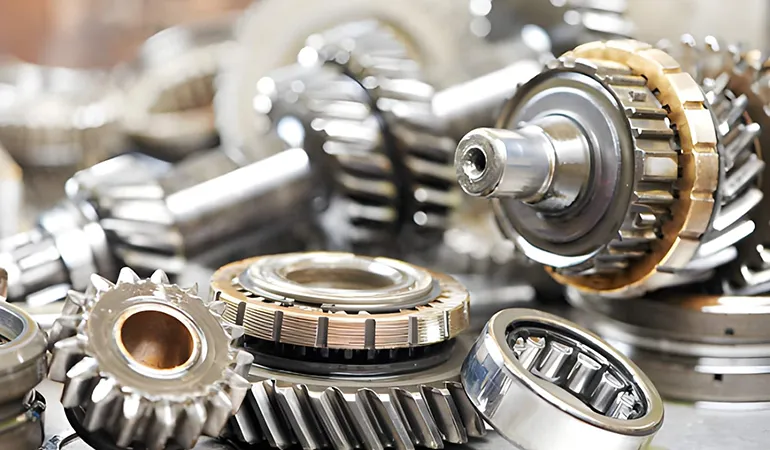
Industrial components are the foundation of modern machinery, production equipment and mechanical systems. Whether used in manufacturing lines, agricultural equipment, packaging machines, conveyors, gearboxes or automation systems, these components directly affect performance, safety and service life.
Common industrial components include bearings, gears, transmission parts, shafts, couplings, bushings and other mechanical spare parts. Although each part may look small compared with the whole machine, choosing the wrong component can lead to vibration, wear, machine downtime and higher maintenance costs.
For industrial buyers, equipment manufacturers and maintenance teams, understanding how to select reliable industrial machinery components is essential.
What Are Industrial Components?
Industrial components refer to mechanical parts used in machines, equipment and production systems. They are designed to support motion, transmit power, reduce friction, connect parts or protect machine structures.
Typical industrial components include:
- Bearings
- Gears
- Transmission parts
- Shafts
- Couplings
- Bushings
- Pulleys
- Sprockets
- Mechanical connectors
- Machine spare parts
These components are widely used in industrial machinery, construction equipment, mining machines, agricultural machines, packaging equipment, automotive systems and many other applications.
Bearings: Reducing Friction and Supporting Rotation
Bearings are among the most commonly used industrial components. Their main function is to reduce friction between moving parts and support rotational or linear movement.
Common Types of Bearings
- Deep groove ball bearings
- Roller bearings
- Tapered roller bearings
- Pillow block bearings
- Thrust bearings
- Needle bearings
- Linear bearings
Bearings are used in motors, pumps, gearboxes, conveyors, machine tools and industrial equipment. When choosing bearings, buyers should consider load capacity, speed, temperature, lubrication, sealing and installation space.
A high-quality bearing helps improve equipment efficiency, reduce energy loss and extend machine service life.
Gears and Transmission Parts: Power Transfer in Machinery
Gears and transmission parts are responsible for transferring torque and motion between mechanical systems. They are essential in gearboxes, drive systems, automation equipment and heavy-duty machinery.
Common Transmission Components
- Spur gears
- Bevel gears
- Worm gears
- Sprockets
- Pulleys
- Chains
- Timing belts
- Gear shafts
The quality of gears and transmission parts affects noise level, movement accuracy, torque output and overall machine stability. For demanding applications, precision machining and proper heat treatment are very important.
Shafts, Couplings and Bushings
Shafts, couplings and bushings are also important mechanical components in industrial equipment.
Shafts
Shafts transmit rotational power from one part of a machine to another. They are commonly used in motors, gearboxes, rollers, pumps and drive systems.
Couplings
Couplings connect two shafts together and compensate for slight misalignment. They help transmit torque while reducing vibration and shock.
Bushings
Bushings are used to reduce wear and friction between mechanical parts. They are often used in hinges, rotating joints, agricultural machinery and construction equipment.
When selecting shafts, couplings or bushings, buyers should check material, hardness, tolerance, surface finish and operating environment.
Standard Industrial Components vs Custom Mechanical Components
Many industrial components are available as standard parts. However, some applications require custom mechanical components based on drawings, samples or technical requirements.
Custom industrial components may be required when:
- The machine design is non-standard
- Special dimensions are needed
- Specific materials are required
- Higher tolerance is necessary
- A replacement part is no longer available
- OEM production requires private specifications
Custom industrial parts can include machined shafts, special bushings, non-standard couplings, precision gears and customized transmission parts.
How to Choose a Reliable Industrial Components Supplier
When sourcing industrial components, price should not be the only factor. A reliable supplier should provide stable quality, accurate dimensions, suitable materials and professional communication.
Key Points to Check
- Product range
- Material options
- Machining accuracy
- Surface treatment capability
- OEM and custom service
- Quality inspection
- Delivery stability
- Export experience
Working with an experienced industrial components supplier helps reduce equipment failure risk and improve procurement efficiency.
Why Choose Focrea for Industrial Components?
Focrea supplies a wide range of industrial components for machinery and industrial equipment, including bearings, gears, transmission parts, shafts, couplings, bushings and mechanical spare parts.
We support both standard products and custom mechanical components according to drawings, samples or specific requirements.
Whether you need industrial components for equipment repair, machinery production, maintenance or OEM projects, Focrea can help you source suitable parts with stable quality and flexible service.
FAQ
What are the most common industrial components?
The most common industrial components include bearings, gears, shafts, couplings, bushings, transmission parts, pulleys, sprockets and mechanical spare parts.
Can industrial components be customized?
Yes. Many industrial components can be customized according to drawings, samples, materials, dimensions and tolerance requirements.
What industries use industrial components?
Industrial components are used in machinery manufacturing, automation equipment, agricultural machinery, construction equipment, automotive systems, packaging machines and maintenance projects.
How do I choose the right industrial component?
You should check application, load, speed, material, size, tolerance, surface treatment and working environment before purchasing.
